
Mini FRM Module Repairs
Post-In Service Available
Quick Turnaround
Secure Shipping
Professional Mini FRM3 Repair, Covering the Full R-Series Range
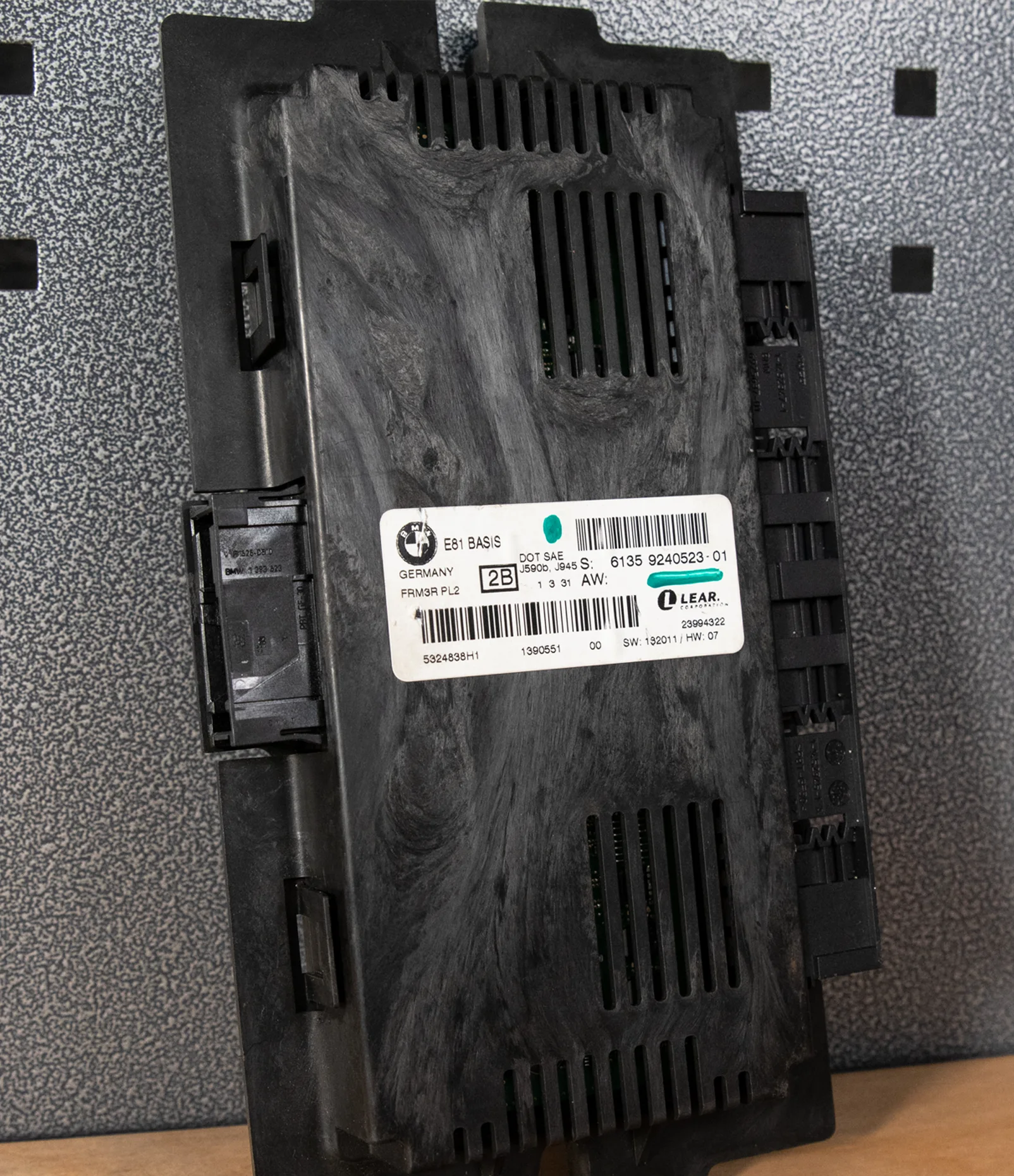
If you own a Mini built between 2007 and 2016 (an R55, R56, R57, R58, R59, R60 or R61), the Footwell Module is the one component most likely to let you down. The FRM3 is fitted across the entire R-series range and fails with a frequency that many Mini owners quickly become familiar with once it happens to them.
There are two distinct ways the FRM3 fails, and understanding which one you’re dealing with determines what can be done about it. Some failures are electrical, caused by voltage disruption from a flat battery, jump starting or interference during diagnostic work. Others are physical, the result of water ingress and corrosion reaching the module over time. Both are problems we deal with regularly from our Telford workshop, with a post-in service meaning customers across the UK can access specialist repair without needing to travel.
While the FRM3 is widely associated with the Mini R-series, the same module is fitted across a number of BMW E-series platforms and fails for many of the same reasons. If you’re dealing with a BMW rather than a Mini, take a look at our BMW FRM Module Repair page for more information on how we handle those.
What Does A Failing
Mini FRM Module Look Like?
The Footwell Module controls a wide range of systems simultaneously, which is why failure rarely shows up as one obvious fault. More often it’s several things going wrong at once, which is exactly what makes it so misleading to deal with.
Common signs include:
- Headlights or tail lights stuck on and unable to be switched off
- Electric windows stopped working entirely or behaving intermittently
- Indicators failing to operate
- Central locking or electric mirrors becoming unresponsive
- Interior lights failing or cutting in and out unpredictably
- No communication between the module and diagnostic equipment
- Unexpected warning messages or bulb failure alerts on the dashboard
The faults can appear suddenly, sometimes following a battery change or jump start, sometimes with no obvious trigger at all. The car typically remains driveable, but the faults don’t resolve themselves.
In some cases, a failing Footwell module can intermittently show faults, leading to further misdiagnosis and replacement of functioning components. This is why it’s recommended to seek specialist diagnostic services for all electrical related faults.
Not All Modules Failures Are The Same
The cause of failure matters, because it determines what fixes are available.
Electrical failures occur when voltage disruption corrupts the module’s internal data. The FRM3 is widely considered to be highly sensitive to power interruptions, more so than many equivalent modules, and even a routine battery change on the wrong day can be enough to trigger it. This type of failure accounts for a large proportion of what we see, and in most cases it’s repairable, with the original module returned to full working condition.
Physical failures are a different matter. Water ingress and corrosion are a documented and recurring problem on Mini R-series vehicles, caused by blocked drain holes, leaking sunroof vents or water finding its way in through other channels. These water leaks can go unnoticed for some time, with moisture gradually reaching the Footwell Control Module and causing internal damage that no electrical diagnosis can resolve.
When corrosion is the cause, repair isn’t always possible. If a water damaged module has suffered extensive internal corrosion, it’s beyond saving. We’ll tell you that clearly rather than return something that won’t hold.
In any situation where water ingress is evident, we strongly advise having the vehicle checked for water leaks and ensuring it’s fully watertight before a new module is installed. Without addressing the root cause, the same outcome is extremely likely to follow.
How Can We Repair Your Footwell Module?
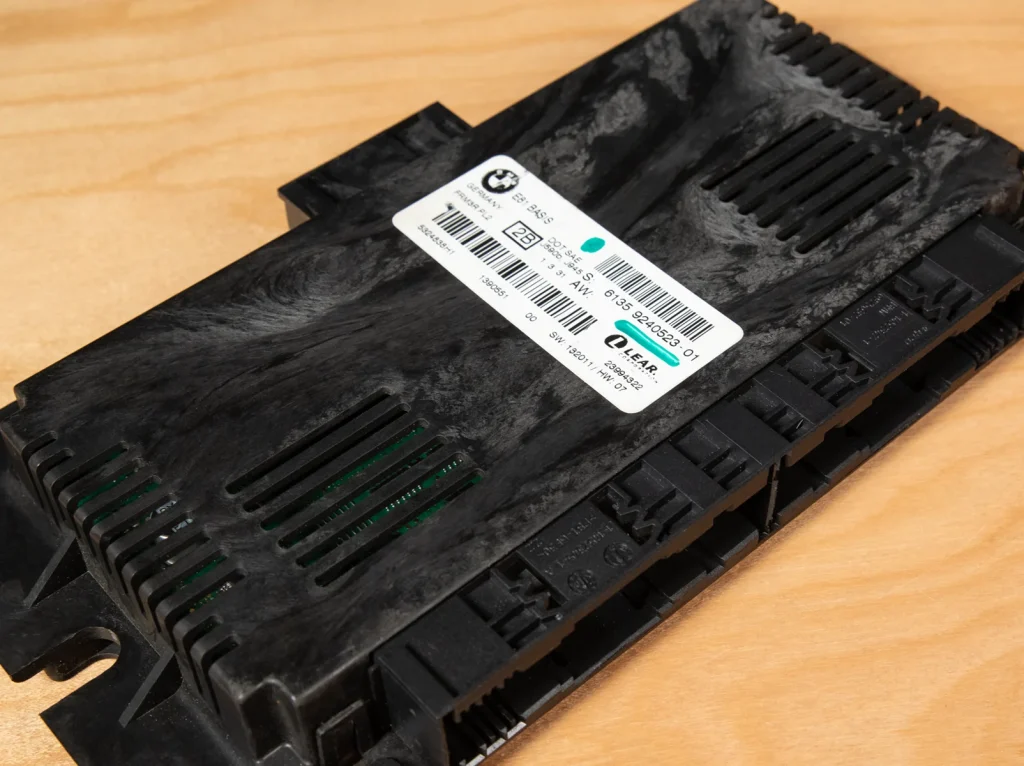
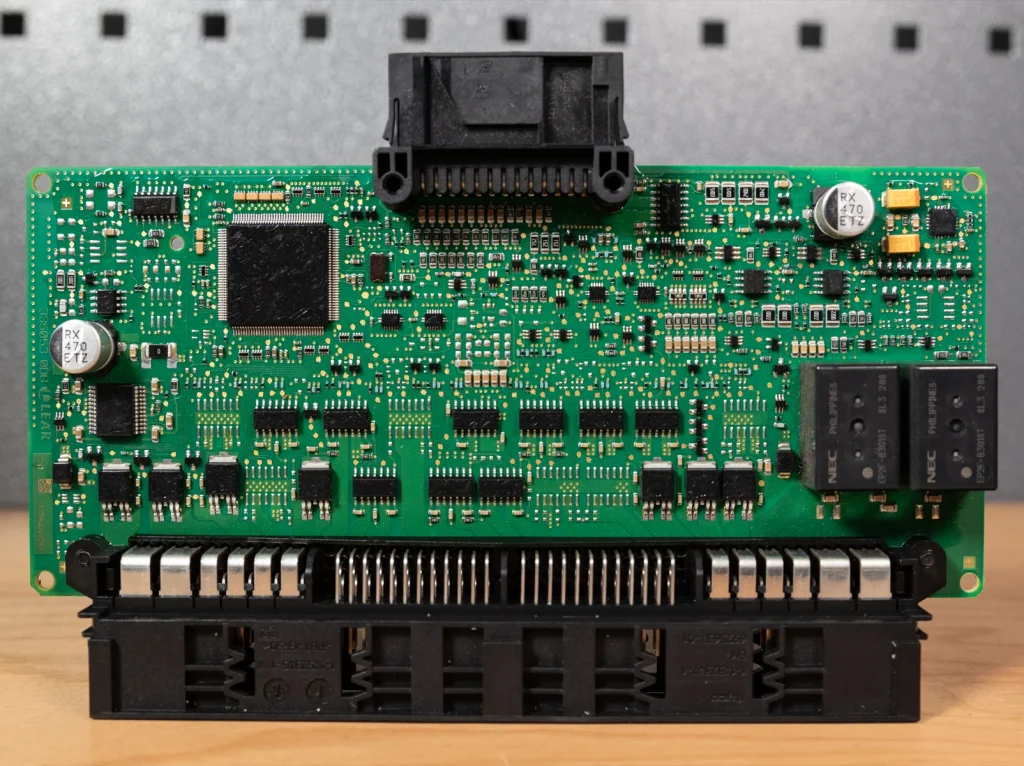
Remove the FRM Module from your Mini’s driver-side footwell, package it securely with particular attention to the connectors, and send it to our Telford workshop using a tracked service. Once it arrives, we test and diagnose it using professional diagnostic equipment before any work begins, so you know exactly what you’re dealing with before a decision is made.
If the repair is viable, we carry it out and return the module ready to refit. No coding required; it goes straight back in.
If you already know or suspect physical damage and need to send a replacement unit alongside the original for cloning, get in touch before sending and we’ll confirm what you need to do.
What We Can & Can't Fix
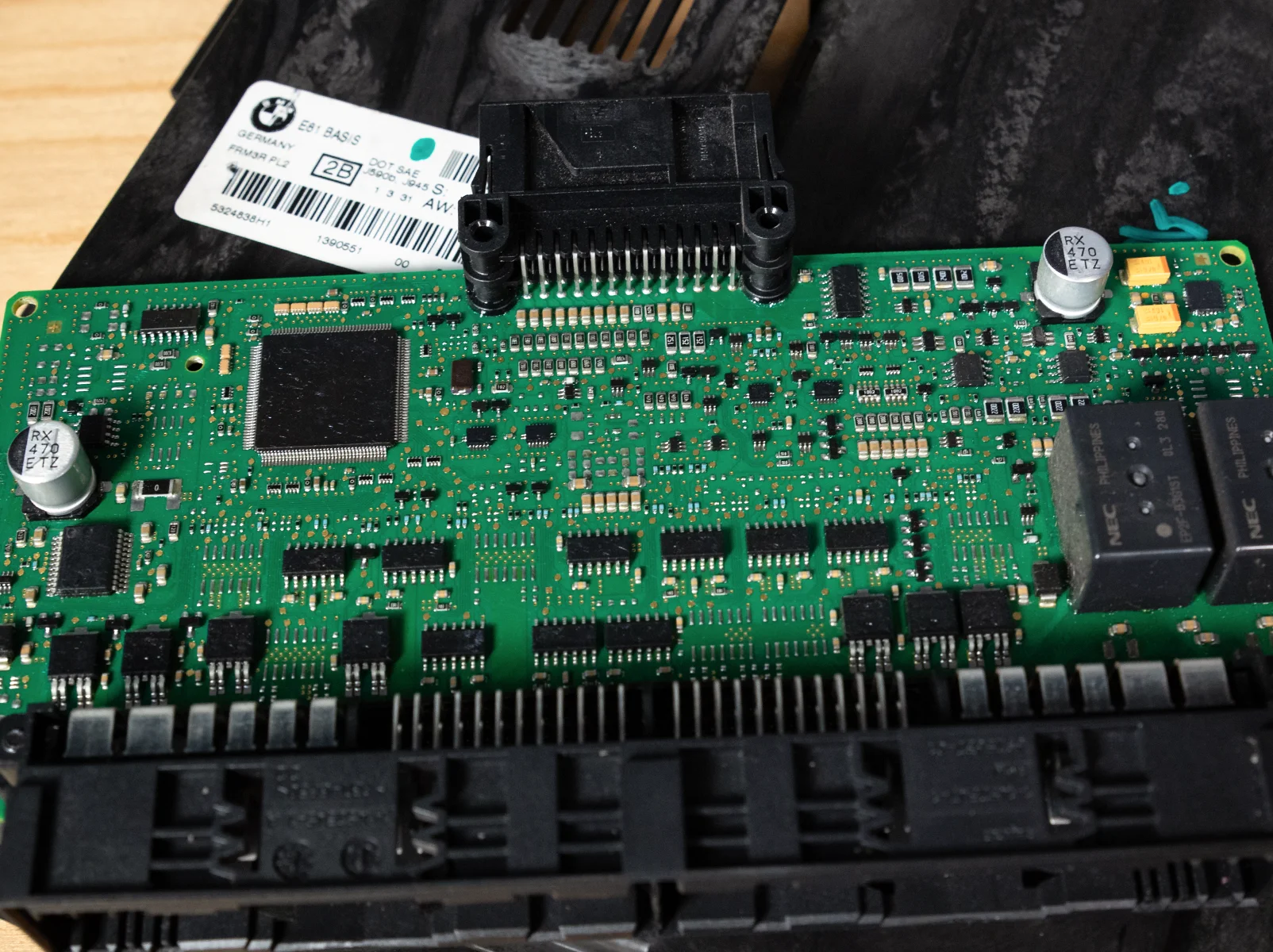
For electrical and data failure, repair is the right route in the majority of cases. The original module is restored, all existing data is retained, and it’s returned ready to refit without any additional programming.
For corrosion damage, it depends entirely on what we find. Some moisture-affected units can be recovered. Others can’t, and pretending otherwise helps nobody. Our job is to give you an honest assessment based on what’s actually in front of us, not to turn every job into a repair regardless of whether it’s the right call.
Send it in, we’ll tell you what we’ve got.